What We’re Building
The Crystal Spring Tower is being constructed to the south of the hospital, where out-of-use tennis courts previously existed. It will consist of two floors of parking, an expanded Emergency Department (ED) and nine floors that will make up Carilion’s Cardiovascular Institute. The ED will include 95 beds, in addition to a new 40-bed observation unit. Carilion’s Roanoke-based heart and vascular services will be consolidated into one location. “This project will address many of the needs our community has told us about,” said Steve Arner, president and COO for Carilion Clinic and president and CEO of Carilion Medical Center, which includes Roanoke Memorial and Roanoke Community hospitals along with several other clinical sites. “There will be more capacity in our emergency department – one of the busiest in Virginia – and there will be more easily accessible parking for our patients and visitors. To top it all off, our Cardiovascular Institute will find a new home in the addition.”
Facts & Figures
35,240
cubic yards of cut
65,200
cubic yards of fill
7,290
linear feet of underground pipe
6,600
linear feet of utilities
210,800
square feet of exterior skins
3,422
pieces of structural steel
23,114
cubic yards of concrete
1,655
cubic yards of deep foundations
170,827
linear feet of M&P piping
64,147
pieces of duct work
49,363
linear feet of interior walls
741
plumbing fixtures
12,923
electrical fixtures
Floor Plans
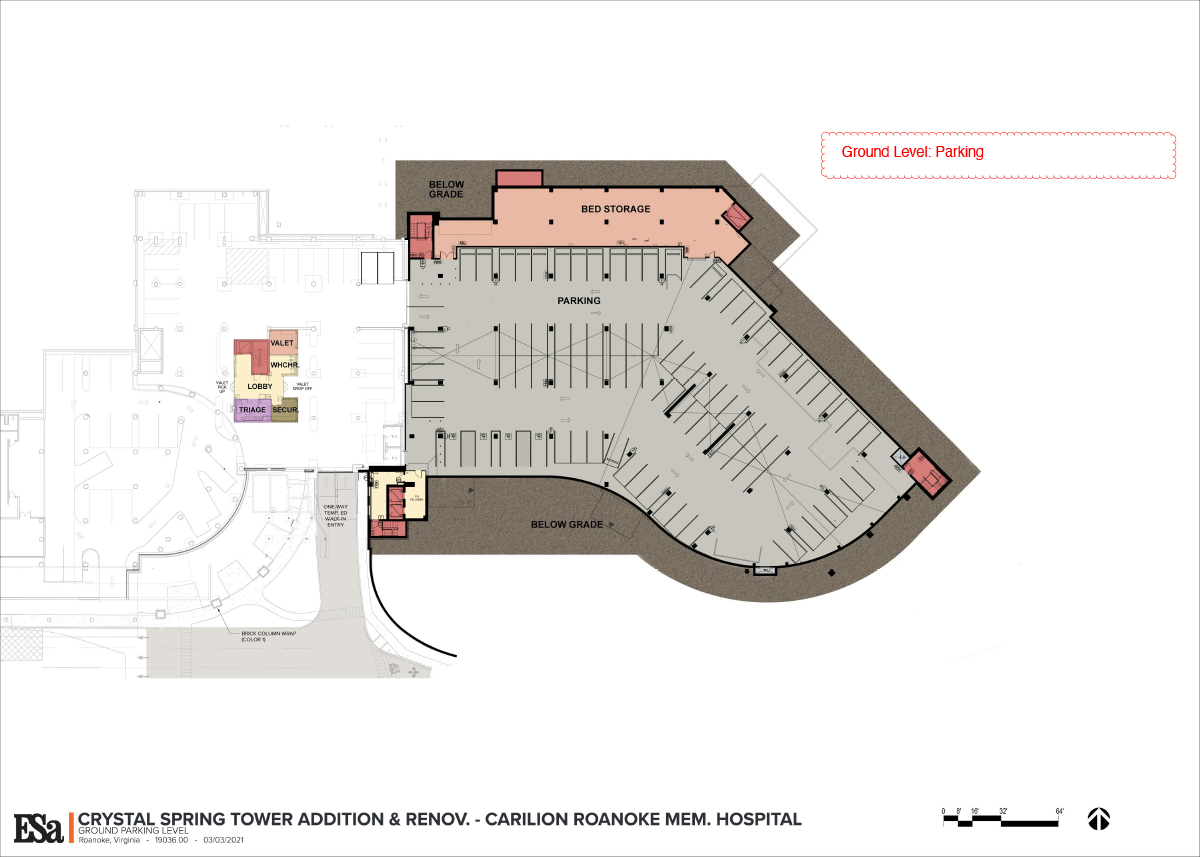
01 Ground Level
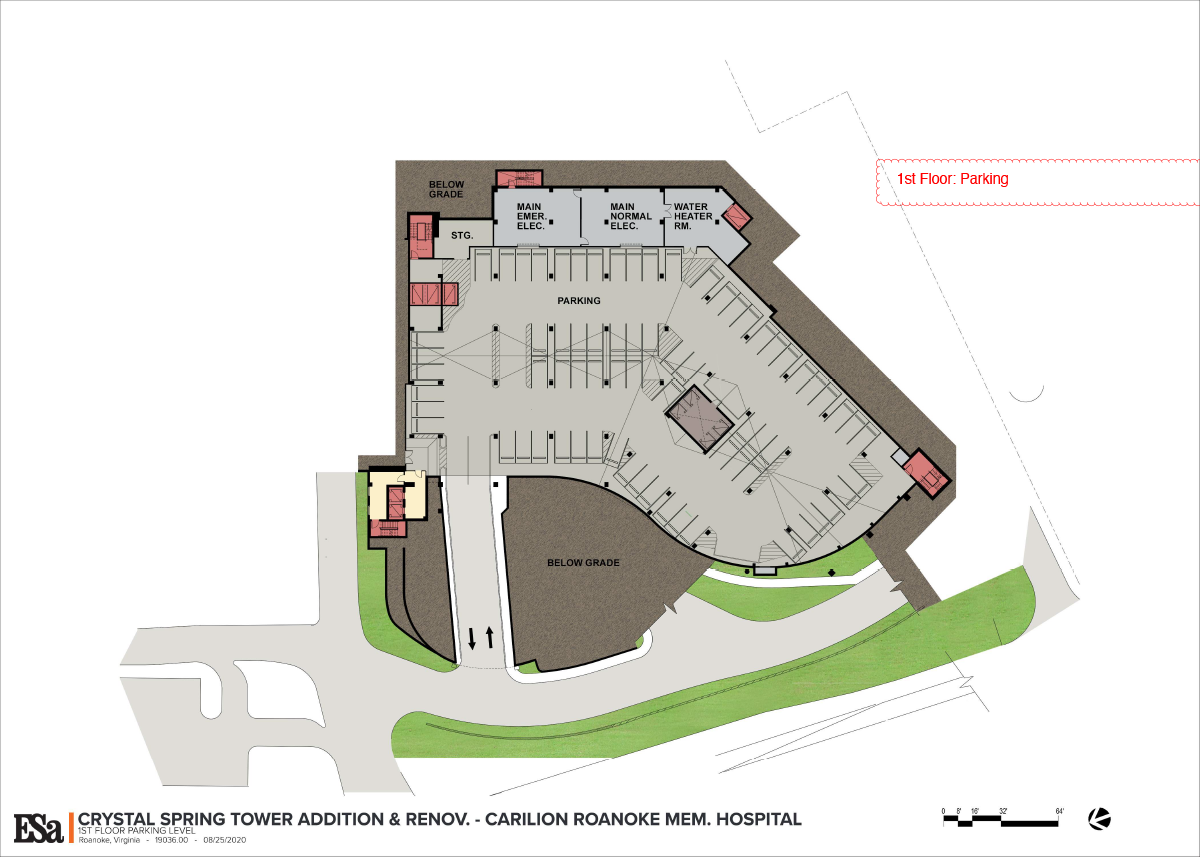
02 1st Floor
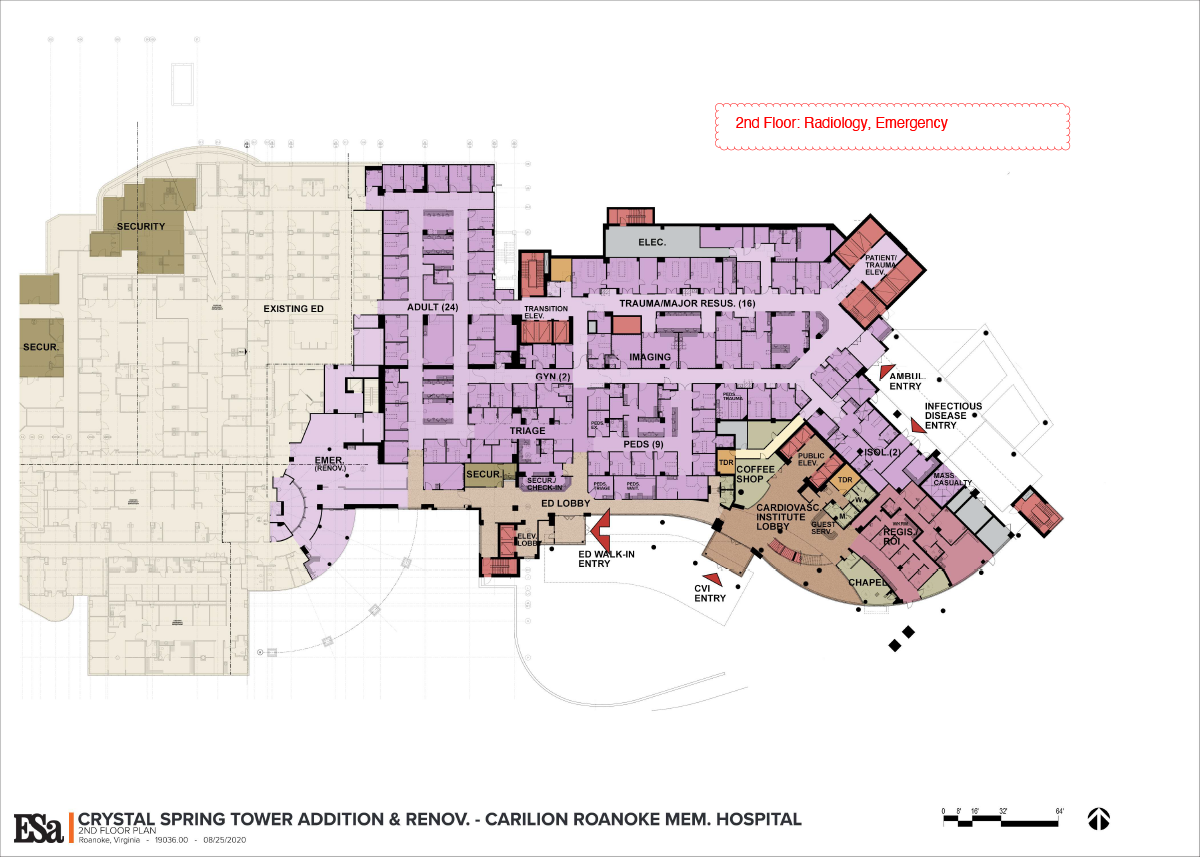
03 2nd Floor
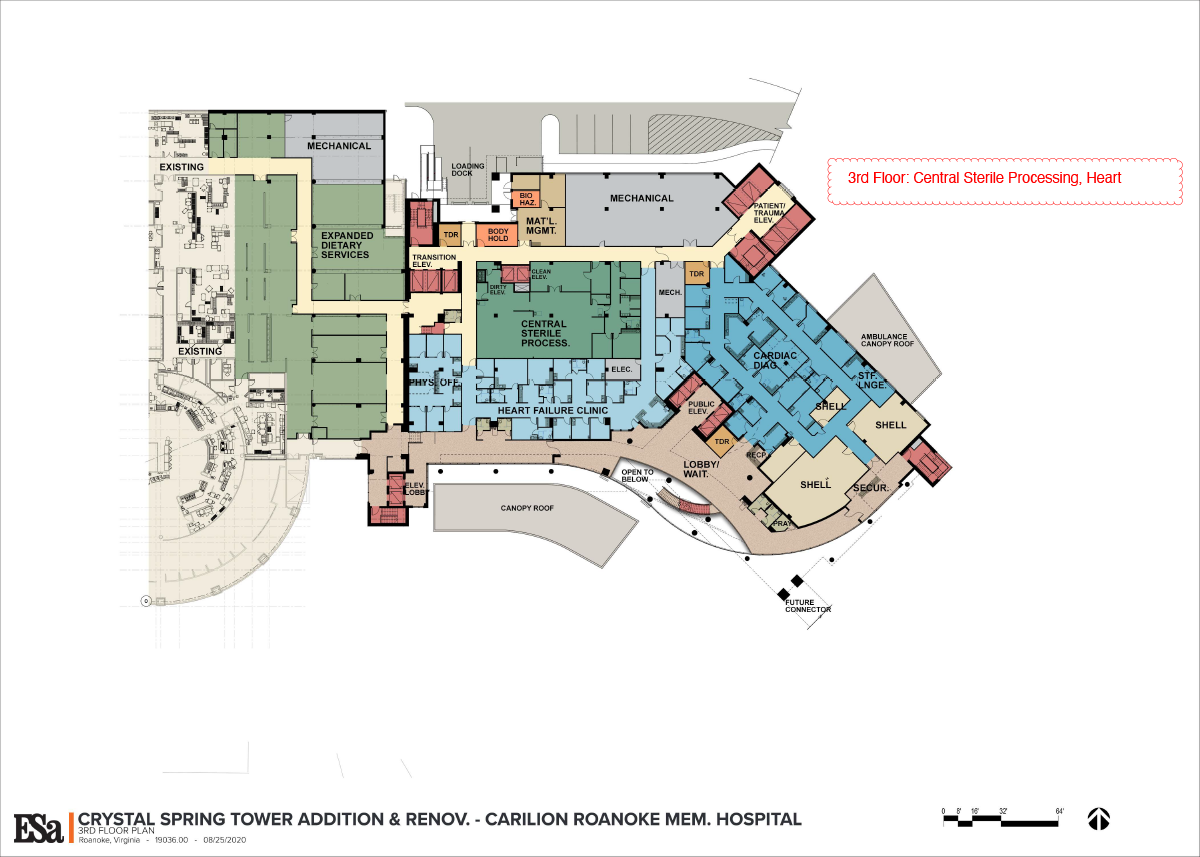
04 3rd Floor
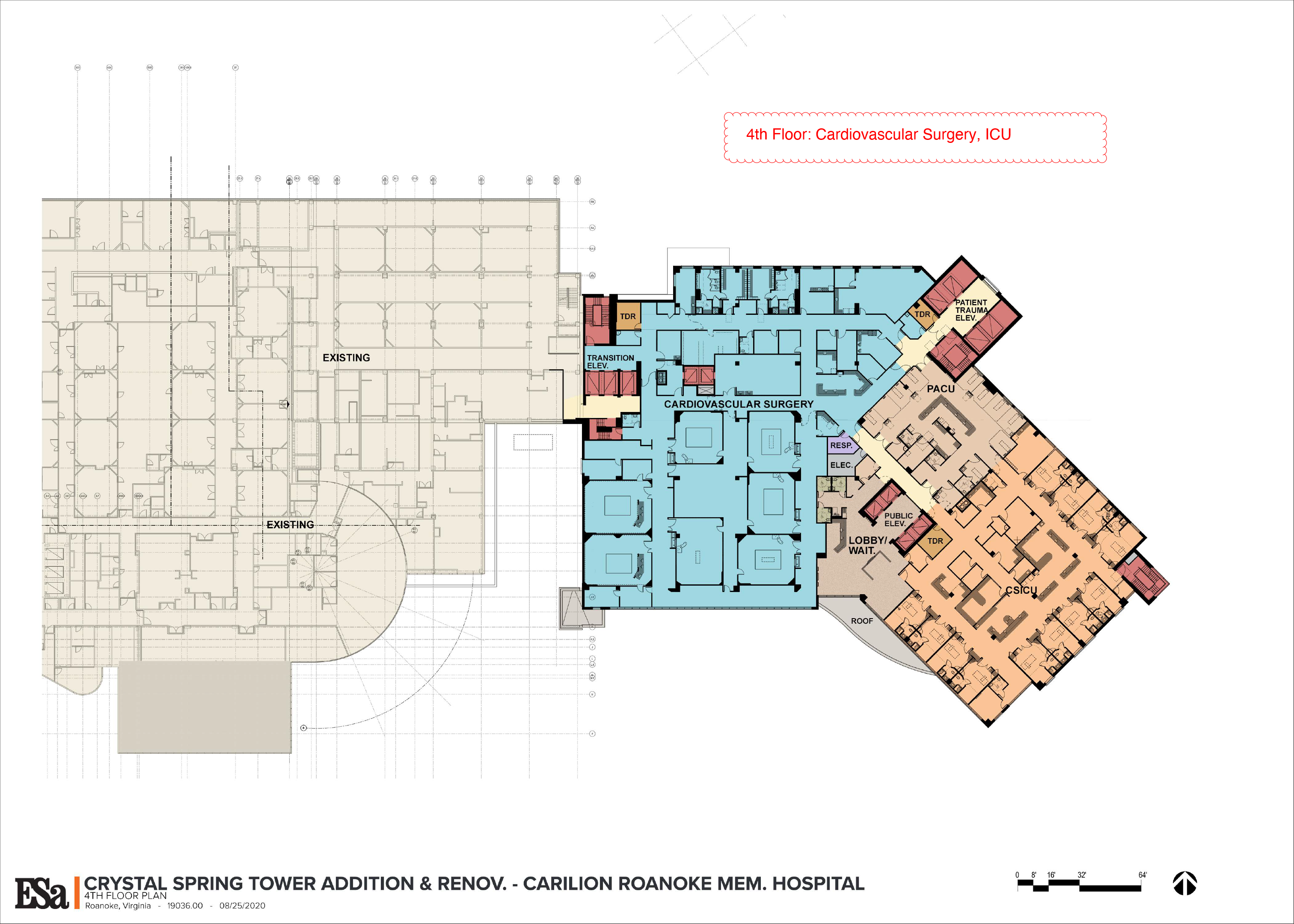
05 4th Floor
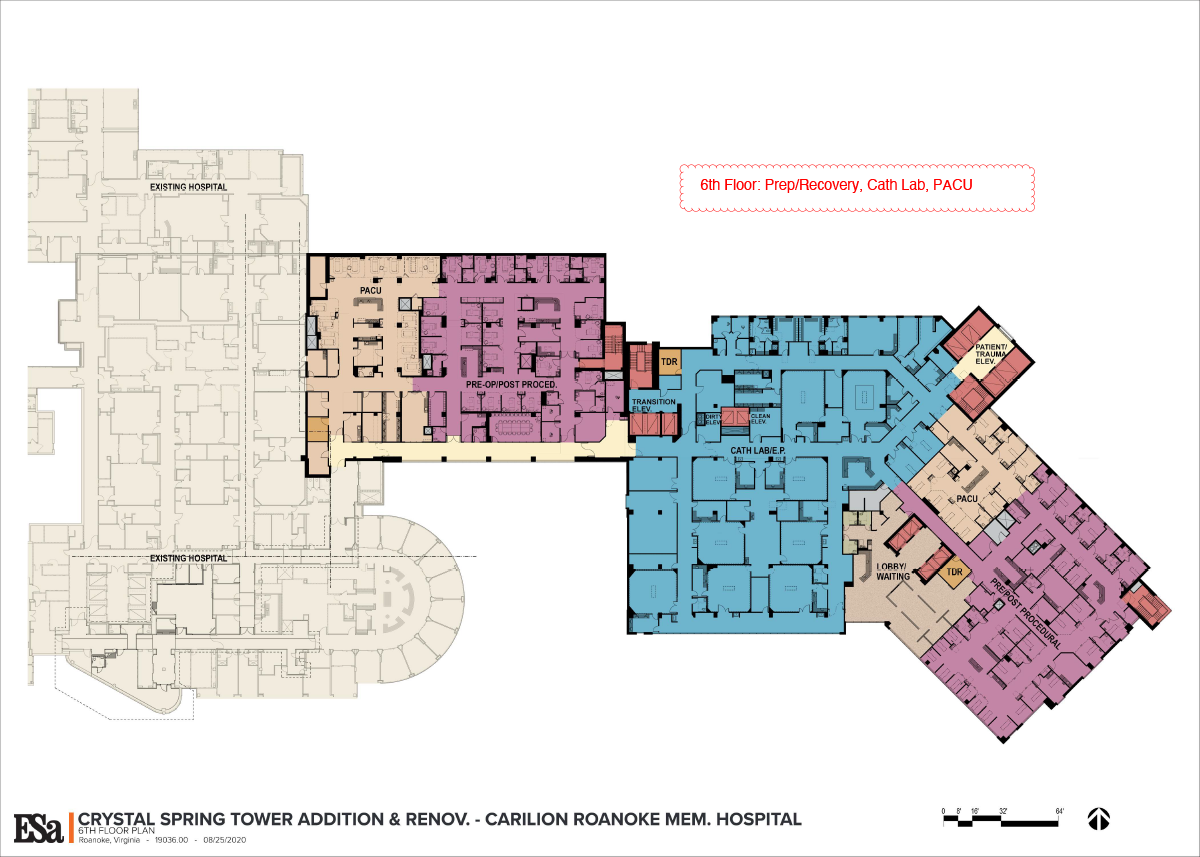
06 6th Floor
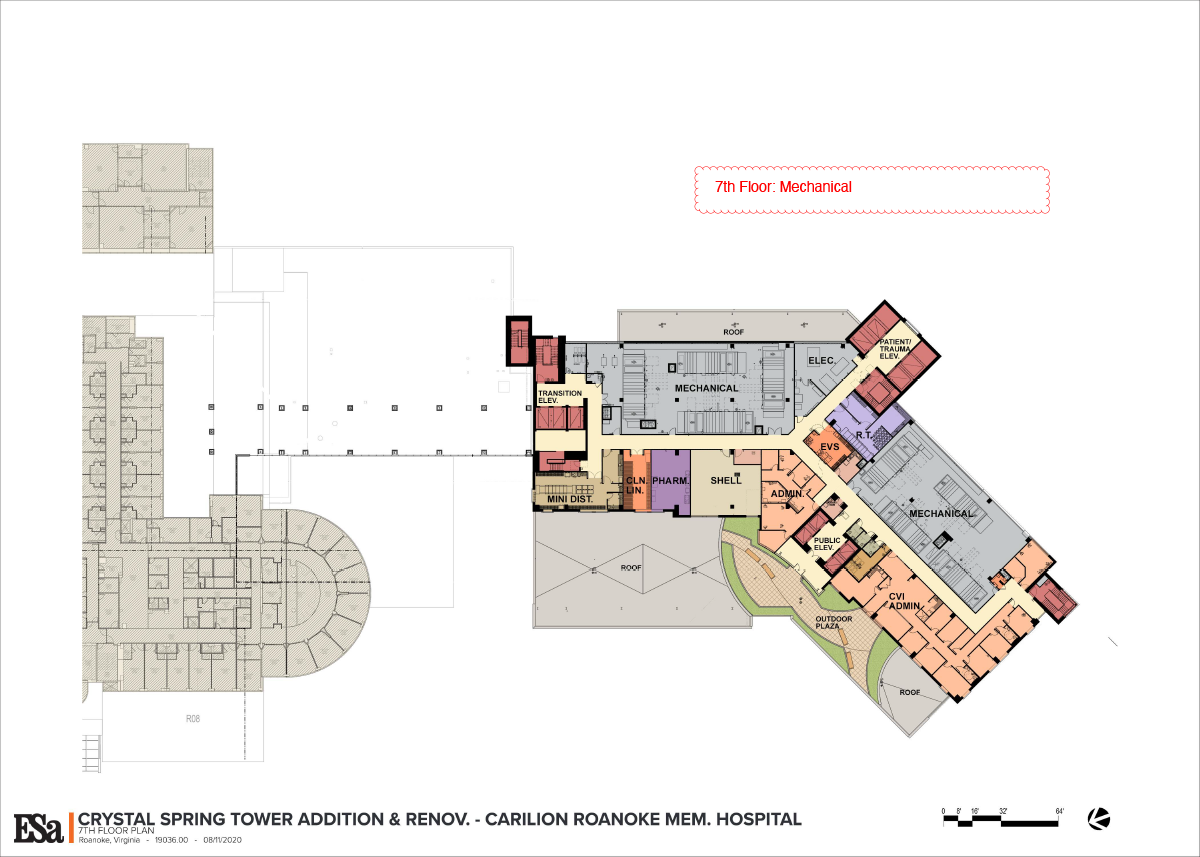
07 7th Floor
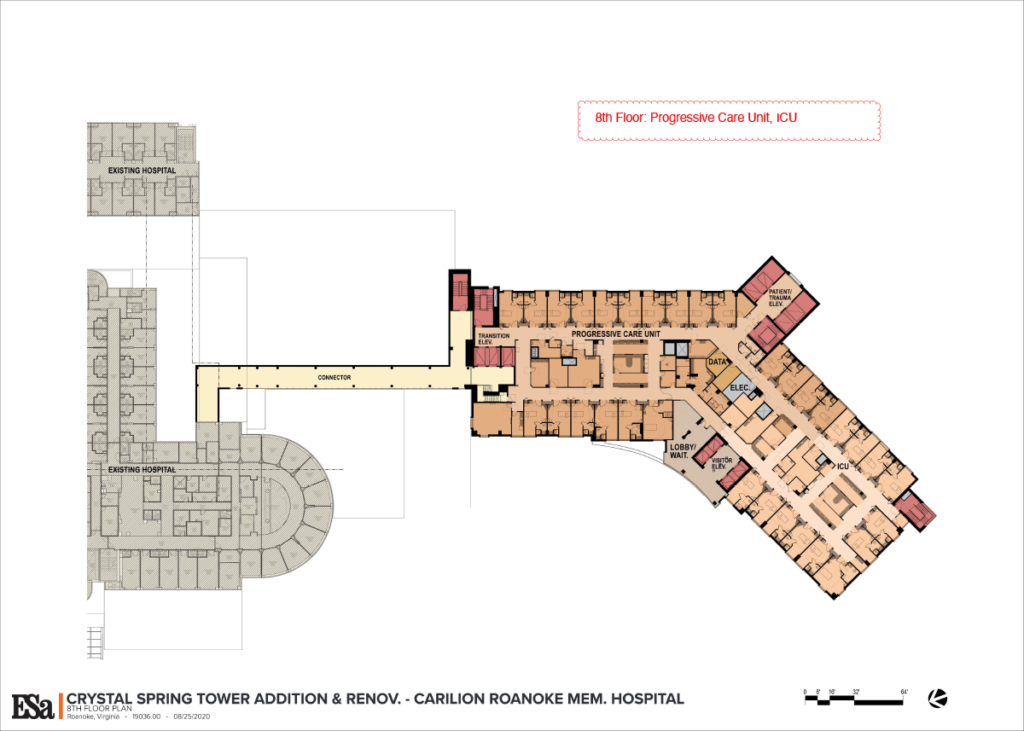
08 8th Floor
09 9th Floor
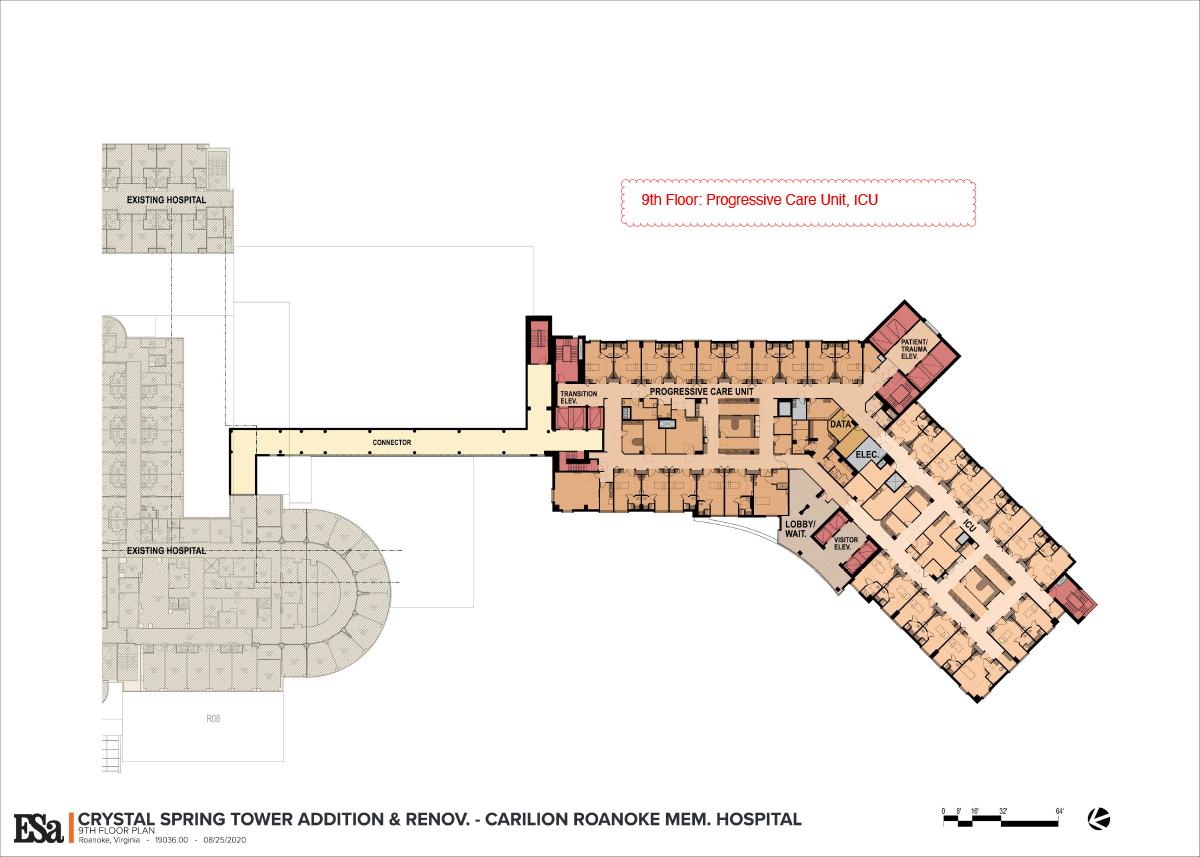
10 10th Floor
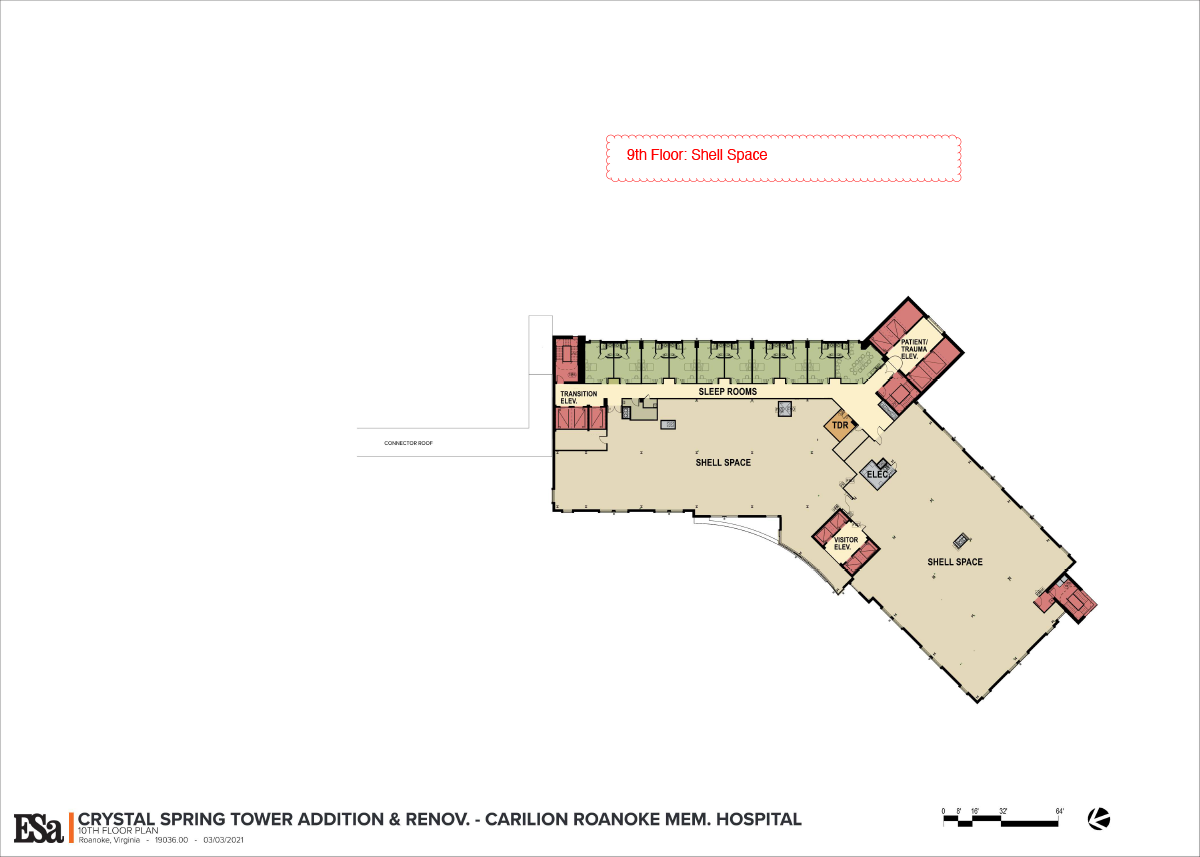
01 11th Floor
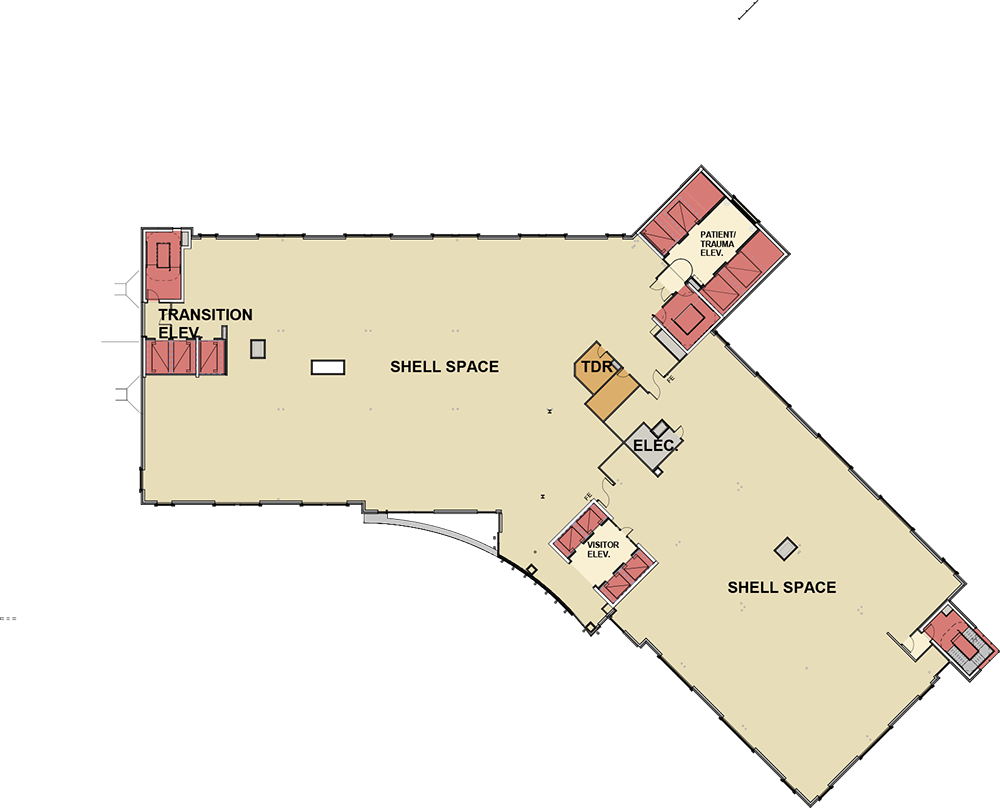
02 12th Floor
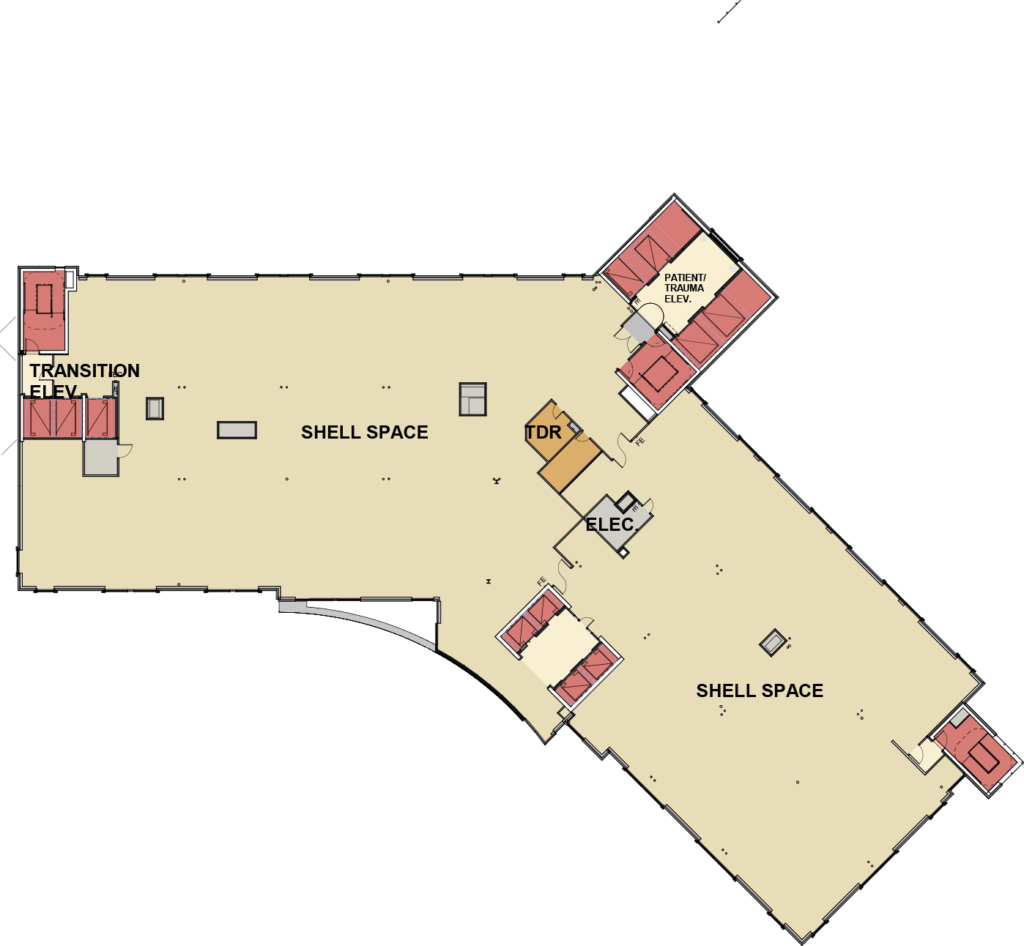
Carilion’s Place in the Region’s History
Carilion is not an overnight success story. Its roots run deep in the region, touching generations of families in the Roanoke and New River Valleys and beyond.
In 1881, the town fathers of what was then known as Big Lick persuaded the Shenandoah Valley Railroad and the Norfolk & Western (N&W) Railway to connect rail lines in their community. Injuries to railroad workers were frequently severe and infections were common, but no emergency care facility existed in Roanoke; local physicians referred seriously ill cases to Johns Hopkins in Baltimore or the Medical College of Virginia in Richmond.
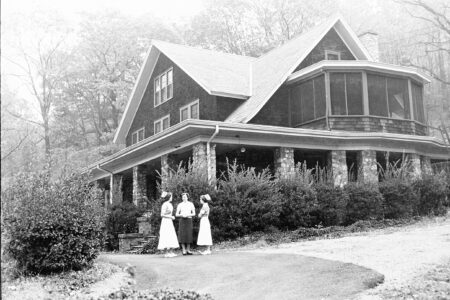
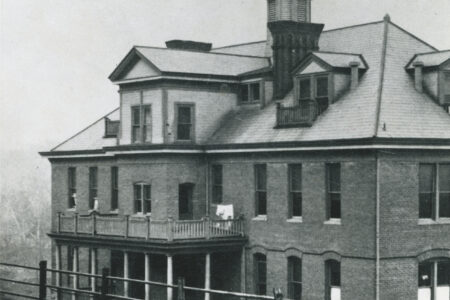
In 1892, several energetic, dedicated and persevering women established the first charitable hospital in Roanoke and outfitted a residence with six beds, but the hospital was too small and its equipment inadequate to serve the needs of the growing population. In 1888, six local businessmen secured a charter for the Roanoke Hospital Association, and in 1900, the Roanoke Hospital opened its doors to all citizens, regardless of their ability to pay.
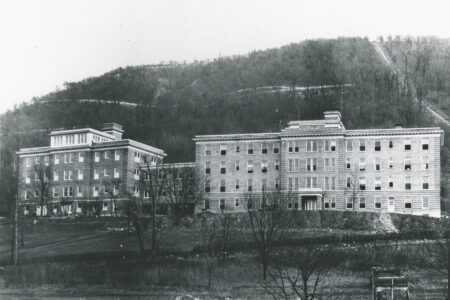
By the 1920s, Roanoke’s population had topped 50,000 people and the flu epidemic had underscored the need for improved medical services. Thanks to fundraising efforts, the South Wing opened in 1922.