
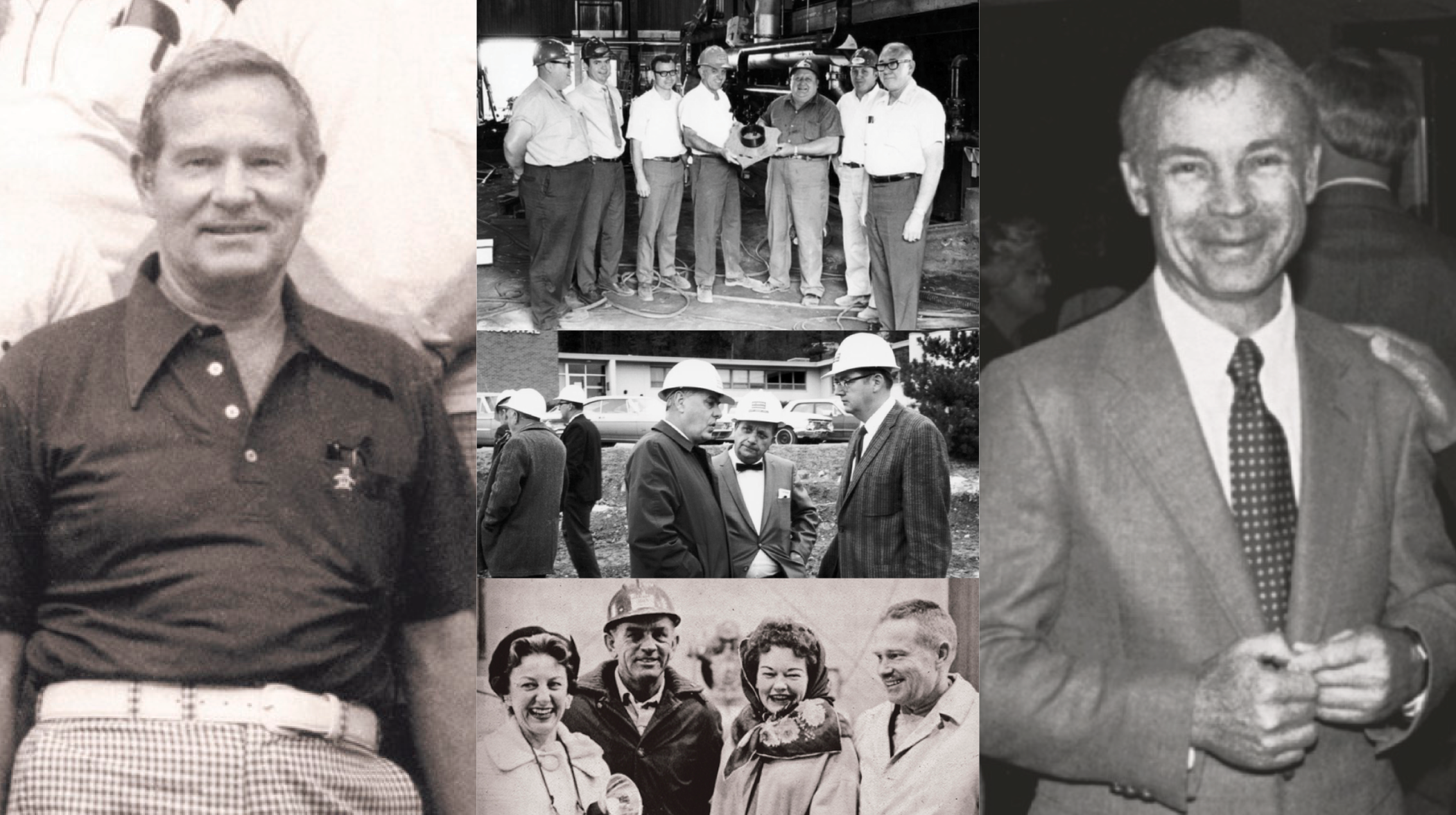
The relationship between Todd Robins and Barry Morton exemplified mentorship at its best, built on trust, respect, and shared purpose. What began as a summer job for Barry evolved into a lifelong partnership that shaped not only Barry’s career but the future of Robins & Morton.
National Mentoring Month marks a time to reflect on their story and the importance of recognizing and igniting potential.
The Early Years
When Todd Robins founded Robins Engineering in Birmingham in 1946, he established a culture of integrity, safety, excellence, and client focus that guides Robins & Morton today. As part of that culture, Todd instilled in his team a responsibility to mentor. That emphasis on mentorship would shape generations.
Among those profoundly influenced by his leadership was Barry Morton, whose journey from apprentice carpenter to chairman emeritus of Robins & Morton exemplifies the transformative power of mentorship.
Barry’s story began in Birmingham, where he grew up in a family deeply connected to construction. His father, Boyette Edgar “Sunshine” Morton, worked as a concrete superintendent for Robins Engineering, and Barry spent his summers as an apprentice carpenter alongside his brother Steve. Those early experiences introduced Barry to the values that would define his career: hard work, humility, and a commitment to excellence.
After graduating from Shades Valley High School — where he served as student body president and captain of the football team — Barry earned a degree in Building Science from Auburn University in 1960. He joined Robins Engineering full time, eager to contribute to the company that he and his family had already known and loved for years.
Becoming Robins & Morton
Over the next two decades, Barry grew closer to Todd Robins, their relationship rooted in mutual respect and shared values. Todd recognized Barry’s leadership qualities and mentored him intentionally, bringing Barry into strategic conversations, challenging him to think beyond the immediate project, and modeling a leadership style grounded in relationships.
In time, Todd sold shares of the company to Barry, signaling his confidence in Barry’s ability to carry forward and build on the legacy that Robins Engineering began in 1946. In 1966, the company became The Robins Corporation, and by 1975, Barry had become a part-owner. In 1982, he was named president.
In 1991, the company officially became Robins & Morton — a name that reflected the pair’s shared vision. Barry later served as chairman and CEO before transitioning to chairman emeritus in 2015, marking more than six decades of service.
Becoming a Top Healthcare Contractor
The influence of Todd’s mentorship extended far beyond Barry’s personal growth. Under Barry’s leadership, Robins & Morton evolved from a regional contractor into one of the nation’s leading healthcare builders. This shift began in the 1970s with hospital renovations in Alabama and Tennessee, but it was the partnership with Hospital Corporation of America (HCA) in the early 1980s that proved pivotal.
Barry’s ability to cultivate relationships — a skill he learned from Todd — helped secure a trio of HCA projects that propelled Robins & Morton into new markets. These projects demanded not only technical expertise but also a collaborative mindset. Barry championed integrated project delivery long before it hit the mainstream. He fostered teamwork among architects, engineers, and contractors, and his leadership developed a culture where trust and partnership mattered as much as schedules and budgets.
By the 1990s, Robins & Morton had become a top healthcare contractor, completing landmark projects like Bristol Regional Medical Center. Barry’s willingness to take calculated risks underscored his commitment to the company and his confidence in its people.
A Legacy Beyond Business
Barry’s legacy is not measured solely by what he built, but it is reflected in his influence. He believed that leadership meant service, and he gave his time to industry boards, community organizations, and philanthropic causes — from supporting Auburn University’s Construction Industry Fund to founding Sunshine Farm, a retreat for youth ministries.
Today, Robins & Morton stands as a testament to the enduring influence of mentorship. The company’s culture of integrity, safety, excellence, and client-focused service traces back to Todd’s vision and Barry’s stewardship. Their story is a reminder that mentorship is more than giving advice — it is an investment in people, a commitment to shared success, and a legacy that outlives any single career.