
By: Jared Wilson
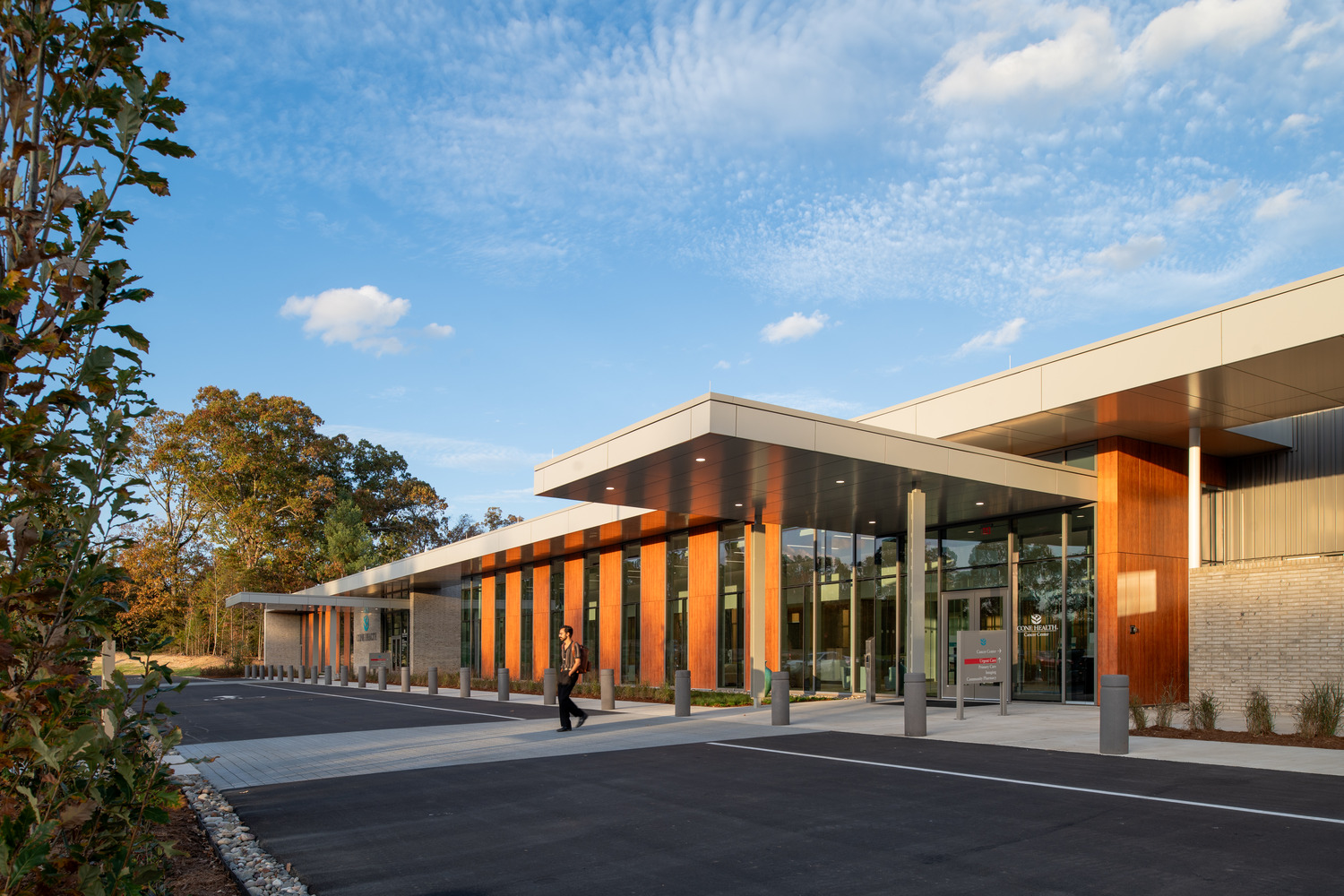
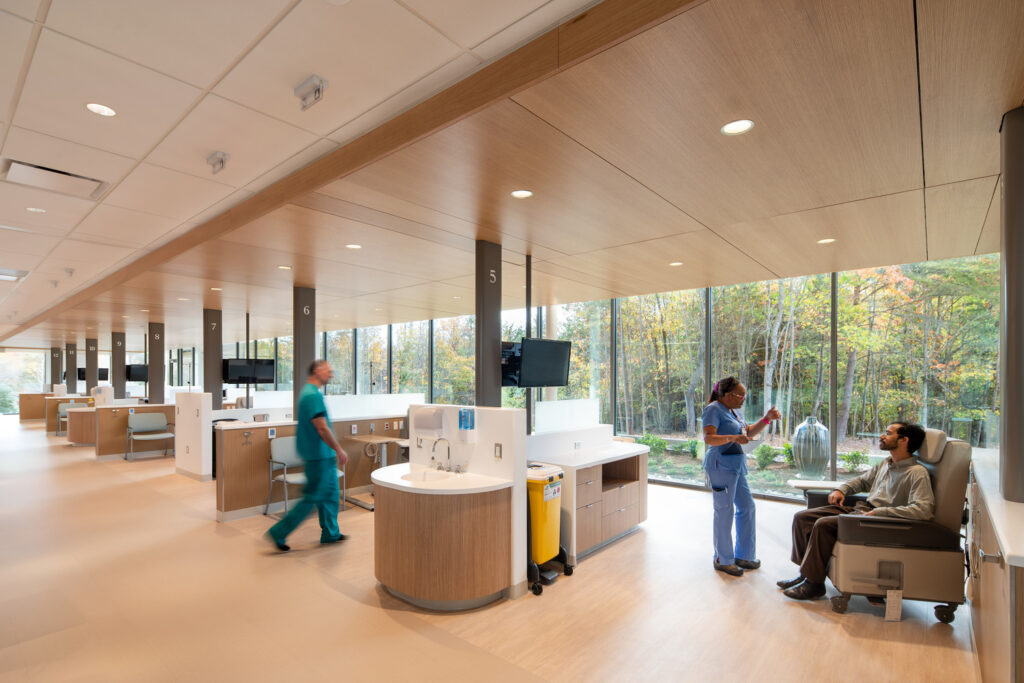
If there’s ever been a job where the clock was ticking and the stakes were high, it was the Cone Health MedCenter Asheboro project. Serving as superintendent, I arrived in Asheboro, North Carolina, prepared to deliver a 51,500-square-foot cancer center under a true Integrated Project Delivery (IPD) contract. We faced a hyper-compressed schedule, a challenging procurement market, and a mix of IPD experience on the team, all while ensuring that local cancer care wouldn’t be interrupted. Here’s how we did it.
The Setup: A True 2-Minute Drill
From the outset, the project was a sprint. Cone Health’s existing cancer care facility was under an expiring lease, leaving just 24 months to select a team, generate a facility program and use case, design, build, and open a new, state-of-the-art facility. That’s a fraction of the time typically allotted for a project of this size, and missing the deadline wasn’t an option. Patients in the region depended on the timely completion of the new center.
The project operated under a true IPD contract, meaning everyone — the client, architect, engineers, contractors, and key trades — shared risk and reward. While some team members had previous IPD experience, many were new to this delivery method. Essentially, we had to learn quickly and build trust during a project that was already due on a tight timeline.
Building the Team and the Plan
A unique aspect of this project was how the team was assembled. Cone Health brought in the engineers first, then onboarded the architect and the general contractor, followed by structural consultants. Mechanical, electrical, plumbing, and other key trades followed. Everyone worked together in the Big Room onsite. Daily collaboration in this shared space fostered trust and kept everyone focused on the same goal.
Lean tools, especially Takt Planning, played a major role in the project’s success. Takt Planning divided the job into zones and set a rhythm for each trade to move through the building. This was a first-time experience for many of our trade contractors, but it kept the work flowing and helped maintain schedule. When supply chain issues arose, the structure provided by Takt Planning proved invaluable.
Procurement in Hyperspeed
The market presented significant challenges, as lead times for items like the switchgear and generators were unusually long. Procurement decisions had to be made before floorplans were finalized, and major MEP equipment was ordered immediately after validation, prior to the full design and program being in place. While this approach may have carried risk in a traditional project, under the IPD contract, we knew that any obstacles we faced, we would solve as a team. Ultimately, the approach paid off in a big way.
Flexibility and Real-World Problem Solving
Another major challenge was the client’s need for flexibility in shell space usage. Decisions about certain areas were still pending even as construction progressed. User group meetings were held regularly, and the design was kept as open as possible, locking in details only when necessary.
When the decision was made to design and upfit the shell space while the building was already under construction, the team pivoted quickly to finalize design and scope. The team was also challenged to change the location of the future linear accelerator, requiring redesign and relocation of active, major utilities. The use of BIM was integral to making these revisions quickly and without impacting the overall project schedule.
The team was also tasked with activating portions of the building early to facilitate the first patient day. This required complex areas — such as the lab, compounding pharmacy, linear accelerator, and other imaging spaces — to be ready four months ahead of substantial completion. With that, user groups could move into their spaces, commission, and start up sensitive equipment.
Late in the project, billing requirements required separating radiology and outpatient spaces. Normally, this would have resulted in a major change order and schedule delays. However, with all partners working together in the Big Room, a solution was developed within a couple of weeks, allowing the project to stay on track.
Lessons Learned for IPD Rookies and Veterans Alike
Several key lessons emerged from this project:
- A large project or a team full of IPD experts isn’t required for success — buy-in, transparency, and a willingness to learn together are.
- Early procurement and scenario planning pay off tremendously when market timetables don’t mesh with the project’s goals.
- Lean tools like Takt Planning help maintain momentum, even when challenges arise.
- Co-location and daily communication build trust and enable proactive problem-solving.
The Result
The project was completed on time and under budget, delivering a facility that brings cancer care closer to home for patients in Asheboro. We achieved stretch goals and added square footage, and Cone Health began seeing patients as scheduled through phased activation. The experience demonstrated that even a team new to IPD can deliver outstanding results with commitment to the right culture.
Jared Wilson is a superintendent for construction firm Robins & Morton. He joined the Robins & Morton team in 2017, when he also began his Lean journey. Since then, Jared has directly contributed to the success of projects totaling more than $1.5 billion, including several high-profile healthcare projects in the Carolinas. Jared is frequently tapped as a subject matter expert on topics such as integrated project delivery (IPD), Lean tools and philosophies, and healthcare construction.