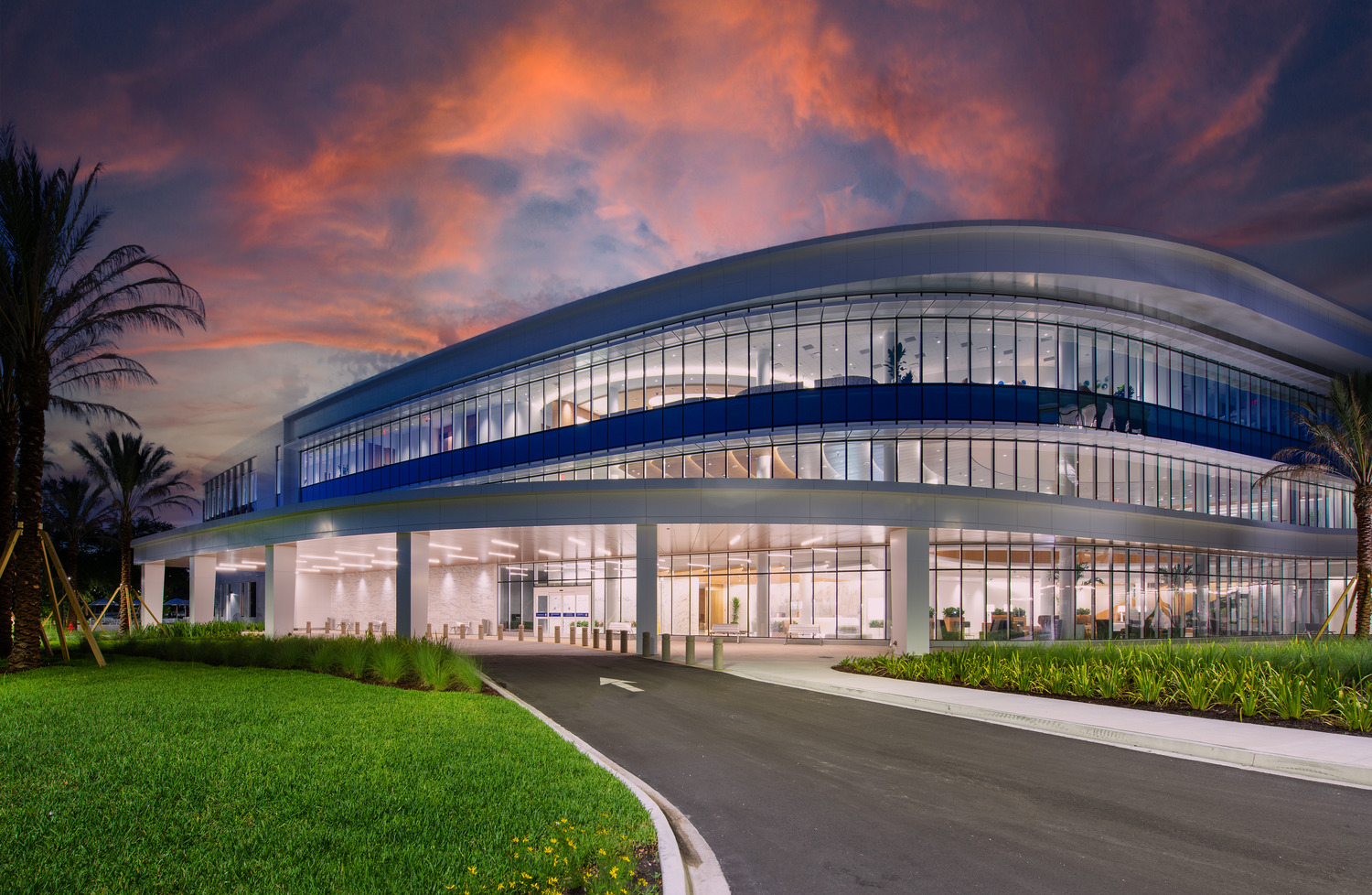
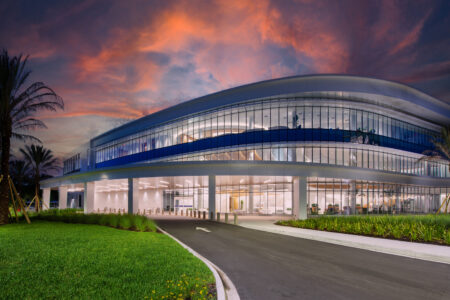
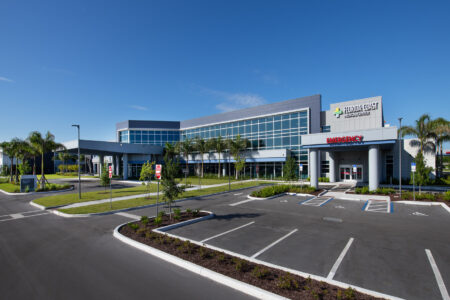
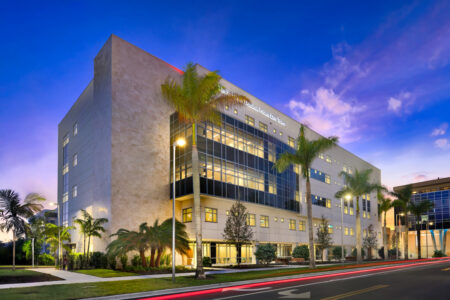
West Kendall Baptist Hospital
Owner: Baptist Health of South Florida
Location: Miami, Florida
Size: 288,000 sq ft
Cost: $121,000,000
Completion Date: April 2011
Architect: MGE Architects
Description: West Kendall Baptist Hospital is a teaching hospital with surgical, emergency, maternity and diagnostic units. The hospital represents the first completely new, non-replacement hospital built in Miami in more than 35 years.
West Kendall Baptist Hospital was built to withstand a Category 5 hurricane with winds of 180 mph. The building is self-sustainable for a minimum of five days following a severe weather event.
The West Kendall Baptist Hospital campus will house a freestanding, four-story, 63,000 square-foot building for physician offices with an outpatient diagnostic and imaging center on the first floor. This building will be adjacent to the hospital.
West Kendall Baptist Hospital project in Miami, Florida recently received LEED® Gold Certification from the Green Building Certification Institute in coordination with U.S. Green Building Council. Robins & Morton worked with the owner, MGE Architects, and TLC Engineering to develop and integrate sustainable goals and ideas that are beneficial to the environment, building operations, and all future occupants.
During hospital design, sustainable decisions included selecting and restoring a brownfield site, minimizing the building footprint to increase outdoor green space, establishing a recycling center on-site, and selecting a white roof to minimize heat-island effect. In an effort to conserve water, the design team recommended low-flow fixtures to minimize potable water usage by 20% and required water efficient landscaping installation to reduce irrigation water consumption by more than half. Other design team efforts optimized energy performance, increased natural ventilation, and provided individual controls for lighting and thermal systems.
During construction of the hospital, the project team worked toward selecting sustainable materials, monitoring and improving indoor air quality, developing a pollution prevention plan, and properly installing and commissioning the mechanical and electrical systems. To obtain sustainable materials, Robins & Morton made an effort to locate materials within the project region, utilize materials with a high recycled content, only select materials with low levels of irritating compounds, and reuse or manage the waste generated during construction. We also required the subcontractors to follow an indoor air quality plan aimed at minimizing irritable contaminants that generally result from construction activities. Upon completion of these construction activities, the contractor then tested the air to ensure a healthy air quality for future building occupants.